Canto 3
Chapter 21: The Conversation Between Manu and Kardama
(1) Vidura said: 'Oh supreme one, be so good to describe the most esteemed dynasty of Svâyambhuva Manu, the procreative activity of which led to all the progeny. (2) Priyavrata and Uttânapâda, the two sons of Svâyambhuva Manu, ruled the world consisting of the seven continents according to the principles of religion. (3) The daughter of that Manu named Devahûti, oh brahmin, was the wife of the father of mankind you spoke of [see 3.12: 27] as Kardama Muni, oh sinless one. (4) Please tell me, eager as I am, the story about the many offspring that he, who in fact was a great mystic yogi endowed with the eight perfections [see 3.15: 45], begot by her? (5) And how did the worshipful Ruci, oh brahmin, and Daksha, the son of Brahmâ, generate their offspring after securing the two other daughters of Svâyambhuva Manu as their wives?'
(6) Maitreya said: 'Lord Brahmâ told the supreme muni Kardama to beget children after he for ten thousand years had practiced penance on the bank of the river the Sarasvatî. (7) Absorbed in that connectedness Kardama in his yoga was of devotional service unto Him, the Lord who bestows all mercy upon the surrendered souls. (8) The Supreme lotus-eyed Lord being pleased, then showed him in Satya-yuga through the process of hearing, oh Vidura, the absolute truth of His transcendental form. (9) He saw that that body of His was as effulgent and pure as the sun, with a garland of white water lilies and lotuses, and an abundance of slick blackish-blue locks of hair, a lotuslike face and dressed in spotless clothes. (10) Adorned with a crown and wearing earrings He, captivating the heart with His smiling glances, held a conch, a disc and a mace, and played with a white lily. (11) He saw Him in the air standing with His lotus feet on the shoulders of Garuda, with the famous Kaustubha jewel on His chest hanging down from His neck. (12) Having achieved his desire, he, whose heart had always been filled with love, jubilantly fell down with his head to the ground and with folded hands pleased [Him] with prayers.
(13) The sage said: 'Oh worshipable Lord, now we have attained the complete success of having You, the Reservoir of All Goodness, before our eyes. It is a sight that is aspired [even] by yogis who attained the perfection of yoga after gradually elevating through many births. (14) Oh Lord, You even fulfill the desires of those who, for the purpose of obtaining the trivial pleasures of life that one also finds in hell, have lost their intelligence because of Your deluding energy, but do worship Your lotus feet that are the boat for crossing over the ocean of mundane existence. (15) Desiring to marry a girl of a likewise disposition who in one's marriage is as a cow of plenty, I also with doubtful [lusty] intentions approached You, the root and source of everything and desire tree that fulfills all wishes. (16) Oh original father of all, the conditioned souls in the grip of desire are all bound by the rope of the words of You, the Lord of the living beings. I, following their example, also offer my oblations to You, oh light of eternal time. (17) But they who gave up to pursue their animalistic, earthly interests including the people belonging to them, and who, by discussing Your qualities with each other, took shelter under the umbrella of Your lotus feet, put with the help of that intoxicating nectar an end to their being a servant [a slave] of their physical bodies. (18) The wheel of the universe that with a tremendous speed spins around the axle of Your imperishable [nature, Brahman] with the three naves [of the sun, the moon and the stars], the [twelve to] thirteen spokes [of the lunar months], the three hundred and sixty joints [of the days in a demigod year], the six rims [of the seasons], and the innumerable leaves [which are the moments], may be cutting short the lifespan of the universe but not the lives of the devotees. (19) You, oh Supreme Lord, as the One Self without a second, are desirous to bring about in Yourself controlling by Your deluding yogamâyâ potency, the universes that You by dint of Your own prowess create, maintain and again wind up like a spider does. (20) This material world with its gross and subtle elements that You manifest for us, oh Lord, is not just there because You wish it [to be an experience for] us. When we through Your causeless mercy may perceive Your Supreme Person splendid with the tulsî [of devotion], it is there also to show Your mercy for the sake of our ultimate good [the beatitude]. (21) In order to motivate us, by perceiving You, to forsake [fruitive, profit-minded] activities, You with Your energies brought about the material worlds. I continuously offer My obeisances to the worshipable lotus feet that shower all benedictions on us, small souls.'
(22) The sage [Maitreya] said: 'Thus sincerely having been praised, Lord Vishnu replied Kardama Muni with words sweet as nectar, while He, radiating affection, was standing on the shoulders of Garuda and smilingly looked at him with His expressive eyebrows. (23) The Supreme Lord said: 'Knowing your state of mind, I have arranged that for which you have exercised with Me as the only one to be worshiped. (24) The exclusive worship of Me as is performed by people like you who fixed their mind fully on Me, is never without meaning and purpose, oh leader of the people. (25) The son of the father of man [Brahmâ], the emperor Svâyambhuva Manu, whose righteous actions are well known, lives in Brahmâvarta [the world as part of Brahmâ's lotus] where he rules over the earth with its seven oceans. (26) He, the saintly king, oh scholar, will the day after tomorrow come to this place together with his queen S'atarûpâ, wishing to meet you as an expert in religious matters. (27) He is searching for a husband for his grown-up daughter with black eyes and a character full of good qualities. He will give you her hand in marriage, oh master, for you are a suitable candidate. (28) She is the one your heart longed for all these years, she is your princess, oh brahmin, and will soon serve you to your desire. (29) She will, from the seed you sow in her, give birth to nine daughters, and by those daughters the sages will beget all their children. (30) When you have carried out My command properly and are completely purified by giving up the fruits of action for My sake, you will finally attain Me. (31) With showing compassion and offering safety to all souls, you will be self-realized and perceive yourself and the universe as residing in Me, as also Me residing in you. (32) By your semen I will [appear] as My own plenary portion, oh great sage, and instruct your wife Devahûti in the doctrine of the ultimate reality.'
(33) Maitreya said: 'Thus having spoken to him, the Supreme Lord who could be directly perceived by the senses, departed from lake Bindu-sarovar through which the river Sarasvatî flows. (34) While He before his eyes left by the path of perfection [to the spiritual world] that is praised by all liberated souls, the sage heard the hymns, which form the Sâma Veda, being vibrated by the wings of the Lord's carrier [Garuda]. (35) After His departure, Kardama, the greatly powerful sage, stayed on the bank of lake Bindu, waiting for things to come.
(36) Svâyambhuva Manu mounted together with his wife a gold-plated chariot, placed his daughter on it and thus traveled all over the earth. (37) Oh great archer, as the Lord had foretold, he reached the hermitage of the sage on the very day he completed his vows of austerity. (38-39) That holy auspicious water of the Sarasvatî river flooding the lake, was the nectar frequented by hosts of great sages. It was verily a lake of tears, as it was called after the teardrops that fell down from the Lord's eyes when He was overwhelmed by His extreme compassion for this surrendered soul. (40) The place was holy with clusters of trees and creepers with the pleasant cries of good-natured animals and birds. Adorned by the beauty of groves of trees it was rich with fruits and flowers throughout all the seasons. (41) It teemed with the life of flocks of birds, intoxicated bees madly buzzing around, peacocks proudly dancing and merry cuckoos calling each other. (42-43) The lake was adorned by kadamba, campaka, as'oka, karañja and bakula flowers and âsana, kunda, mandâra, kuthaja trees and young mango trees, and the pleasant sounds could be heard of kârandava ducks, plavas, swans, ospreys, waterfowls, cranes, cakravâka and cakora birds. (44) There were also masses of deer, boars, porcupines, gavayas [wild cows], elephants, baboons, lions, monkeys, mongooses and musk deer.
(45-47) When the first monarch with his daughter entered that eminent place, he saw the sage sitting in his hermitage, offering oblations in the sacred fire. His body shone brilliantly because of his prolonged, terrible penance of yoga and was not very emaciated, for the Lord had cast His affectionate, sidelong glance upon him and made him listen to His moonlike, nectarean words. He was tall with eyes as the petals of a lotus, had matted locks of hair and ragged clothes. Approaching him he appeared to be soiled like an unpolished gem. (48) The monarch having approached the cottage bowed before him, whereupon the sage received him with honor and gave him a welcome befitting a king. (49) After having accepted the respect offered, he then remained seated silently. He was delighted to hear what the sage, thinking of what the Lord had told him, then in a pleasant tone of voice said:
(50) 'I am sure, oh divine personality, that you tour around in order to protect the virtuous souls and put an end to the life of the wicked ones, for you are the person representing the Lord's protective potency. (51) For the sake of your continuance you [according to necessity] accept the different forms of the [organized respect for the] sun, the moon, the fire [Agni], the Lord of heaven [Indra], the wind [Vâyu], the one chastising [Yama], the religion [Dharma] and of the waters [Varuna]. I offer Lord Vishnu, who is You, my obeisances. (52-54) If you would not have mounted the chariot of victory that is bedecked with a mass of jewels and have twanged your bow so frighteningly, threatening all the culprits with your presence, if your leading a huge army of trampling foot soldiers would not have shaken the earth with you roaming the globe like the brilliant sun, then surely all moral codes and obligations of the vocations [varna] and age groups [âs'rama] as arranged by the Lord, oh King, alas would have been broken by miscreants. (55) When you would rest, unrighteousness would flourish with a lack of control over men who are simply after the money. This world would then be seized by those rogues and come to naught [see also B.G. 3: 23]. (56) Nevertheless I ask you, oh hero, what the reason is of your visit, since that is what we without reservation will carry out with heart and soul.'


Third revised edition, loaded December 15, 2023.
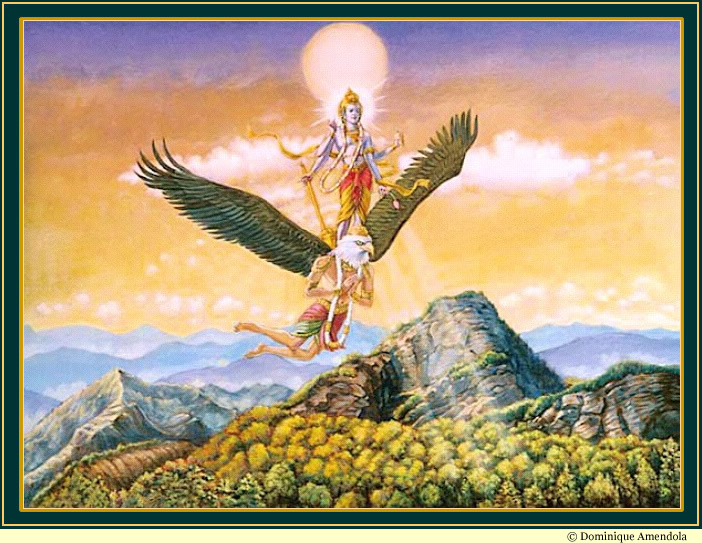
Previous Aadhar edition and Vedabase links:
Vidura said: 'Oh supreme one, be so good to describe the most esteemed dynasty of Svâyambhuva Manu, the procreative activity of which led to all the progeny.Vidura said: 'O supreme one, be so good to describe the most esteemed dynasty of Svâyambhuva Manu, of which sexual intercourse the progeny multiplied. (Vedabase)
Priyavrata and Uttânapâda, the two sons of Svâyambhuva Manu, ruled the world consisting of the seven continents according to the principles of religion.
Priyavata and Uttânapâda, the two sons of Svâyambhuva Manu, verily ruled the world consisting of the seven continents, according the principles of religion. (Vedabase)
The daughter of that Manu named Devahûti, oh brahmin, was the wife of the father of mankind you spoke of [see 3.12: 27] as Kardama Muni, oh sinless one.
Of that Manu was thus known Devahûti, o brahmin, as the wife of the father of man you spoke of [see 3.12: 27] as Kardama Muni, o sinless one. (Vedabase)
Please tell me, eager as I am, the story about the many offspring that he, who in fact was a great mystic yogi endowed with the eight perfections [see 3.15: 45], begot by her?
Can you tell me, eager as I am, the story about how the many offspring of Kardama Muni, who was in fact a great mystic yogi endowed with the eight perfections [see 3.15: 45], was conceived from her? (Vedabase)
And how did the worshipful Ruci, oh brahmin, and Daksha, the son of Brahmâ, generate their offspring after securing the two other daughters of Svâyambhuva Manu as their wives?'
And how did the worshipful Ruci, o brahmin, and Daksha, the son of Brahmâ, generate offspring after securing as their wives the two other daughters of Svâyambhuva Manu?' (Vedabase)
Maitreya said: 'Lord Brahmâ told the supreme muni Kardama to beget children after he for ten thousand years had practiced penance on the bank of the river the Sarasvatî.
Maitreya said: 'Lord Brahmâ commissioned the supreme Muni Kardama to beget children after a penance he had practiced for ten thousand years on the bank of the river the Sarasvatî.(Vedabase)
Absorbed in that connectedness Kardama in his yoga was of devotional service unto Him, the Lord who bestows all mercy upon the surrendered souls.
Absorbed in that connectedness was Kardama through his yoga of service in devotion unto Him, the Lord who bestows all mercy upon the surrendered souls. (Vedabase)
The Supreme lotus-eyed Lord being pleased, then showed him in Satya-yuga through the process of hearing, oh Vidura, the absolute truth of His transcendental form.
Pleased did the Supreme lotus-eyed Lord then show him through the culture of precepts and rituals, o Vidura, His transcendental form. (Vedabase)
He saw that that body of His was as effulgent and pure as the sun, with a garland of white water lilies and lotuses, and an abundance of slick blackish-blue locks of hair, a lotuslike face and dressed in spotless clothes.
That of Him he saw as effulgent and pure as the sun with a garland of white water lilies and lotuses and an abundance of slick blackish-blue locks of hair, a lotus-like face and wearing spotless clothing. (Vedabase)
Adorned with a crown and wearing earrings He, captivating the heart with His smiling glances, held a conch, a disc and a mace, and played with a white lily.
Adorned with a crown and wearing earrings He, captivating the heart with His smiling glances, held a conch, a disc and a mace, while playing with a white lily. (Vedabase)
He saw Him in the air standing with His lotus feet on the shoulders of Garuda with the famous Kaustubha jewel on His chest hanging down from His neck.
He was seen in the air standing with His lotus feet on the shoulders of Garuda with on His chest the famous Kaustubha jewel hanging from His neck. (Vedabase)
Having achieved his desire, he, whose heart had always been filled with love, jubilantly fell down with his head to the ground and with folded hands pleased [Him] with prayers.
Jubilant he fell down with his head to the ground having achieved his desire with his prayers and satisfied with a heart that had always been filled with love, he folded his hands. (Vedabase)
The sage said: 'Oh worshipable Lord, now we have attained the complete success of having You, the Reservoir of All Goodness, before our eyes. It is a sight that is aspired [even] by yogis who attained the perfection of yoga after gradually elevating through many births.
The sage said: 'Oh, now we have attained the complete success of having before our eyes You, the Reservoir of All Goodness; to the sight of You, o worshipable Lord, are yogis, aspiring the perfection of yoga, through many births gradually elevated. (Vedabase)
Oh Lord, You even fulfill the desires of those who, for the purpose of obtaining the trivial pleasures of life that one also finds in hell, have lost their intelligence because of Your deluding energy, but do worship Your lotus feet that are the boat for crossing over the ocean of mundane existence.
Even of those who by Your deluding energy have lost their intelligence and who for obtaining the trivial pleasures - which are also found in hell - worship Your lotus feet that are the boat for crossing over the ocean of mundane existence, You fulfill, o Lord, every possible desire. (Vedabase)
Desiring to marry a girl of a likewise disposition who in one's marriage is as a cow of plenty, I also with doubtful [lusty] intentions approached You, the root and source of everything and desire tree that fulfills all wishes.
Desiring to marry a girl of a likewise disposition which in married life is as a cow of plenty, did I also with lusty intentions approach You, the root and source of everything and desire tree that fulfills all wishes. (Vedabase)
Oh original father of all, the conditioned souls in the grip of desire are all bound by the rope of the words of You, the Lord of the living beings. I, following their example, also offer my oblations to You, oh light of eternal time.
Under the direction of You as the father of all living beings, o my Lord are all these who are victim of their desire bound by the rope of their conditions and do I, conditioned like them, offer You my oblations, o Embodiment of Religion operating as the eternal of time. (Vedabase)
But they who gave up to pursue their animalistic, earthly interests including the people belonging to them, and who, by discussing Your qualities with each other, took shelter under the umbrella of Your lotus feet, put with the help of that intoxicating nectar an end to their being a servant [a slave] of their physical bodies.
But those who gave up on the pursuance of their animalistic earthly interests and took shelter under the umbrella of Your lotus feet by discussing Your qualities with one another, do extinguish by that intoxicating nectar the single servicing of their physical bodies. (Vedabase)
The wheel of the universe that with a tremendous speed spins around the axle of Your imperishable [nature, Brahman] with the three naves [of the sun, the moon and the stars], the [twelve to] thirteen spokes [of the lunar months], the three hundred and sixty joints [of the days in a demigod year], the six rims [of the seasons], and the innumerable leaves [which are the moments], may be cutting short the lifespan of the universe but not the lives of the devotees.
The wheel of the universe that with a tremendous speed spins around the axle of the imperishable of You [Brahman] with three naves [sun, moon and stars], [twelve to] thirteen spokes [as lunar months] three hundred and sixty joints [as days in a demigod year], six rims [as seasons], and innumerable leaves [moments], does not at all diminish the lives of the devotees.(Vedabase)
You, oh Supreme Lord, as the One Self without a second, are desirous to bring about in Yourself controlling by Your deluding yogamâyâ potency, the universes that You by dint of Your own prowess create, maintain and again wind up like a spider does.
You Yourself being the universe are the one without a second desirous to bring about, from the self, controlling by Your deluding oneness in matter, the universes You create, maintain and again wind up like a spider does, o Supreme Lord, of its own force. (Vedabase)
This material world with its gross and subtle elements that You manifest for us, oh Lord, is not just there because You wish it [to be an experience for] us. When we through Your causeless mercy may perceive Your Supreme Person splendid with the tulsî [of devotion], it is there also to show Your mercy for the sake of our ultimate good [the beatitude].
This material world with its gross and subtle elements, which You manifest before us, is indeed not Your desire; let her be there for bestowing Your grace upon us when You, through Your causeless mercy, are perceived as the Supreme Lord splendid with tulsî [or worship]. (Vedabase)
In order to motivate us, by perceiving You, to forsake [fruitive, profit-minded] activities, You with Your energies brought about the material worlds. I continuously offer My obeisances to the worshipable lotus feet that shower all benedictions on us, small souls.'
In order to realize detachment in the enjoying of the fruits, You brought about, by Your own energies, the material worlds; continuously I offer My obeisances to the worshipable lotus feet that shower benedictions on the insignificant ones.' (Vedabase)
The sage [Maitreya] said: 'Thus sincerely having been praised, Lord Vishnu replied Kardama Muni with words sweet as nectar, while He, radiating affection, was standing on the shoulders of Garuda and smilingly looked at him with His expressive eyebrows.
The sage [Maitreya] said: 'Thus having been praised sincerely did Lord Vishnu reply Kardama Muni with words as sweet as nectar, while He, standing shining of affection on the shoulders of Garuda, smilingly looked from below His expressive eyebrows. (Vedabase)
The Supreme Lord said: 'Knowing your state of mind, I have arranged that for which you have exercised with Me as the only one to be worshiped.
The Supreme Lord said: 'Knowing your state of mind, have I already arranged for that for which you exercised yourself with Me as the one and only to be worshiped. (Vedabase)
The exclusive worship of Me as is performed by people like you who fixed their mind fully on Me, is never without meaning and purpose, oh leader of the people.
It is verily never useless to be of that certainty, o leader of the living entities, as the minds of persons that like you are worshiping Me, are entirely fixed. (Vedabase)
Text 25
The son of the father of man [Brahmâ], the emperor Svâyambhuva Manu, whose righteous actions are well known, lives in Brahmâvarta [the world as part of Brahmâ's lotus] where he rules over the earth with its seven oceans.
The son of the father of man, the emperor Svâyambhuva Manu, whose righteous actions are well known, has his place in Brahmâvarta [the world as part of Brahmâ's lotus] and rules the seven oceans and the earth. (Vedabase)
He, the saintly king, oh scholar, will the day after tomorrow come to this place together with his queen S'atarûpâ, wishing to meet you as an expert in religious matters.
He, the saintly king, o learned one, will come here along with his queen the day after tomorrow, wishing to see you as an expert in religious activities. (Vedabase)
He is searching for a husband for his grown-up daughter with black eyes and a character full of good qualities. He will give you her hand in marriage, oh master, for you are a suitable candidate.
He has a grown-up daughter with black eyes and a character full of good qualities and is searching for a husband; he will give her to you, o master, for you are a suitable candidate. (Vedabase)
She is the one your heart longed for all these years, she is your princess, oh brahmin, and will soon serve you to your desire.
She is the one your heart was after all these years; she is your princess, o brahmin, and will soon serve you as you desired. (Vedabase)
She will, from the seed you sow in her, give birth to nine daughters, and by those daughters the sages will beget all their children.
She will, from the seed sown in her by you, bear nine daughters, and from those daughters will the wise beget their number of children. (Vedabase)
When you have carried out My command properly and are completely purified by giving up the fruits of action for My sake, you will finally attain Me.
When you will have carried out My command properly and are completely purified unto Me in the resignation of the fruits of action, you will finally attain Me. (Vedabase)
With showing compassion and offering safety to all souls, you will be self-realized and perceive yourself and the universe as residing in Me, as also Me residing in you.
And when you have shown compassion and have given assurance to all souls, you will be self-realized and perceive yourself and the universe as being in Me, as well as Me being in you. (Vedabase)
By your semen I will [appear] as My own plenary portion, oh great sage, and instruct your wife Devahûti in the doctrine of the ultimate reality.'
By your semen I will, as My own plenary portion, o great sage, from your wife Devahûti, instruct the doctrine of the ultimate reality.' (Vedabase)
Maitreya said: 'Thus having spoken to him, the Supreme Lord who could be directly perceived by the senses, departed from lake Bindu-sarovar through which the river Sarasvatî flows.
Maitreya said: 'Thus having spoken to him went the Supreme Lord who is directly perceived by the senses, away from lake Bindu-sarovar through which the river Sarasvatî flows. (Vedabase)
While He before his eyes left by the path of perfection [to the spiritual world] that is praised by all liberated souls, the sage heard the hymns, which form the Sâma Veda, being vibrated by the wings of the Lord's carrier [Garuda].
While He who is praised by all liberated souls left with him looking on, he heard the hymns of the path of perfection that form the Sâma Veda being vibrated by the wings of the carrier of the Lord [Garuda]. (Vedabase)
After His departure, Kardama, the greatly powerful sage, stayed on the bank of lake Bindu, waiting for things to come.
Then, after His departure, did Kardama, the greatly powerful sage, stay on the bank of lake Bindu, awaiting his time. (Vedabase)Svâyambhuva Manu mounted together with his wife a gold-plated chariot, placed his daughter on it and thus traveled all over the earth.
vâyambhuva Manu who mounted a gold-plated chariot, had placed his own daughter on it along with his wife and traveled all the globe. (Vedabase)
Oh great archer, as the Lord had foretold, he reached the hermitage of the sage on the very day he completed his vows of austerity.
On that chariot, o great bowman, he reached as the Lord had foretold, the hermitage of the sage on the day that he completed his vows of austerity. (Vedabase)
That holy auspicious water of the Sarasvatî river flooding the lake, was the nectar frequented by hosts of great sages. It was verily a lake of tears, as it was called after the teardrops that fell down from the Lord's eyes when He was overwhelmed by His extreme compassion for this surrendered soul.
That holy auspicious water flooded by the Sarasvatî river was the nectar that had served hosts of great sages. It was verily a lake of tears, called so after the teardrops that fell down from the Lord His eyes overwhelmed by His extreme compassion for this surrendered soul. (Vedabase)
The place was holy with clusters of trees and creepers with the pleasant cries of good-natured animals and birds. Adorned by the beauty of groves of trees it was rich with fruits and flowers throughout all the seasons.
The place was holy with clusters of trees and creepers with pleasant cries of animals and birds and, adorned by the beauty of groves of trees, rich with fruits and flowers in all seasons. (Vedabase)
It teemed with the life of flocks of birds, intoxicated bees madly buzzing around, peacocks proudly dancing and merry cuckoos calling each other.
It overflowed of the joy of flocks of birds, intoxicated bees madly buzzing around, peacocks dancing in pride and merry cuckoos calling one another. (Vedabase)
The lake was adorned by kadamba, campaka, as'oka, karañja and bakula flowers and âsana, kunda, mandâra, kuthaja trees and young mango trees, and the pleasant sounds could be heard of kârandava ducks, plavas, swans, ospreys, waterfowls, cranes, cakravâka and cakora birds.
Kadamba, campaka, as'oka, karañja and bakula flowers; âsana, kunda, mandâra, kuthaja trees and young mango trees adorned the lake in which kârandava ducks, plavas, swans, ospreys, waterfowls, and cranes were seen while the cakravâka and cakora birds were vibrating their happy sounds. (Vedabase)
There were also masses of deer, boars, porcupines, gavayas [wild cows], elephants, baboons, lions, monkeys, mongooses and musk deer.
Likewise there were also masses of deer, boar, porcupines, gavayas [wild cows], elephants, baboons, lions, monkeys, mongooses, and musk deer. (Vedabase)
When the first monarch with his daughter entered that eminent place, he saw the sage sitting in his hermitage, offering oblations in the sacred fire. His body shone brilliantly because of his prolonged, terrible penance of yoga and was not very emaciated, for the Lord had cast His affectionate, sidelong glance upon him and made him listen to His moonlike, nectarean words. He was tall with eyes as the petals of a lotus, had matted locks of hair and ragged clothes. Approaching him he appeared to be soiled like an unpolished gem.
As the first monarch with his daughter entered that eminent place, they saw the sage sitting in his hermitage, offering oblations in the sacred fire. His body shone brilliantly of his prolonged, terrible penance of yoga and was not very emaciated, as the Lord had cast sidelong His affectionate glance upon him and had made him listen to His moonlike nectarean words. He was tall with eyes as the petals of a lotus, had matted locks of hair, ragged clothes and approaching him he appeared to be soiled like an unpolished gem. (Vedabase)
The monarch having approached the cottage bowed before him, whereupon the sage received him with honor and gave him a welcome befitting a king.
Seeing that the monarch had approached the cottage, he bowed down before him receiving him in honor welcoming him as befitted a King. (Vedabase)
After having accepted the respect offered, he then remained seated silently. He was delighted to hear what the sage, thinking of what the Lord had told him, then in a pleasant tone of voice said:
After receiving his honoring, he then remained silent as he sat down and was delighted to hear what the sage, who remembered what the Lord had told him, then in a sweet voice said: (Vedabase)
'I am sure, oh divine personality, that you tour around in order to protect the virtuous souls and put an end to the life of the wicked ones, for you are the person representing the Lord's protective potency.
'Surely your touring, o divine personality, is there for the protection of the virtuous and the frustration of the ones of untruth, since you are the person of the Lord His protecting energy. (Vedabase)
For the sake of your continuance you [according to necessity] accept the different forms of the [organized respect for the] sun, the moon, the fire [Agni], the Lord of heaven [Indra], the wind [Vâyu], the one chastising [Yama], the religion [Dharma] and of the waters [Varuna]. I offer Lord Vishnu, who is You, my obeisances.
When necessary you assume of the sun, the moon; of the fire [Agni] and the Lord of heaven [Indra]; the wind [Vâyu], the chastising [Yama], the religion [Dharma] and of the waters [Varuna], the different forms; unto Him, the Lord Vishnu that is you, my obeisances. (Vedabase)
If you would not have mounted the chariot of victory that is bedecked with a mass of jewels and have twanged your bow so frighteningly, threatening all the culprits with your presence, if your leading a huge army of trampling foot soldiers would not have shaken the earth with you roaming the globe like the brilliant sun, then surely all moral codes and obligations of the vocations [varna] and age groups [âs'rama] as arranged by the Lord, oh King, alas would have been broken by miscreants.
If You wouldn't have mounted the chariot of victory bedecked with its mass of jewels and have twanged your bow so frighteningly threatening all the culprits with your presence; if your leading a huge army of footsoldiers trampling, wouldn't have shaken the earth in roaming the globe like the brilliant sun, then surely all moral codes and obligations of the vocations [varna] and agegroups [âs'rama] set by the Lord, o King, would regrettingly have been broken by rogues. (Vedabase)
When you would rest, unrighteousness would flourish with a lack of control over men who are simply after the money. This world would then be seized by those rogues and come to naught [see also B.G. 3: 23].
When you would rest, then unrighteousness would flourish with the lacking control over men that are simply after the money; this world would then be taken by the miscreants and perish [see also B.G.: 3.23]. (Vedabase)
Nevertheless I ask you, oh hero, what the reason is of your visit, since that is what we without reservation will carry out with heart and soul.'
In spite of all this I ask You, o heroic one, what You want in coming here; that we shall, without reservation carry out with heart and soul.' (Vedabase)

The text and audio are offered under the
conditions of the
Creative Commons Attribution-Noncommercial-Share Alike 3.0
Unported License.
The painting of Vishnu appearing in the sky on the back of
Garuda is © of Dominique Amendola.
For more of her paintings see her Spiritual Art
gallery. Used with permission.
Production: Filognostic Association of The Order of Time.

Feed-back | Links | Downloads | Music | Pictures | What's New | Search | Donations