(7) Can you from your self-knowledge, tell me
whether the living being itself not being material,
oh brahmin, takes up a material body accidentally or whether it does so
because of some reason?

Chapter
9: Answering by
Citing the Lord's Version
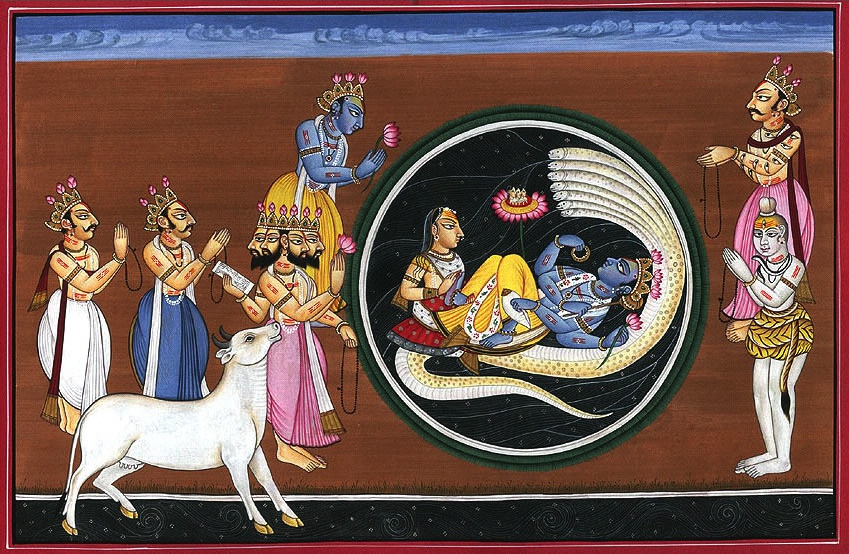
(18) Creator
of
the Universe, who was
overwhelmed by the sight of that audience, with his heart full of
ecstasy and his body full of divine love bowed down with tears
in his eyes before the lotus feet of the Lord that constitute the path
followed by the great liberated souls.
Chapter 10: Bhâgavatam is the Answer to
all Questions
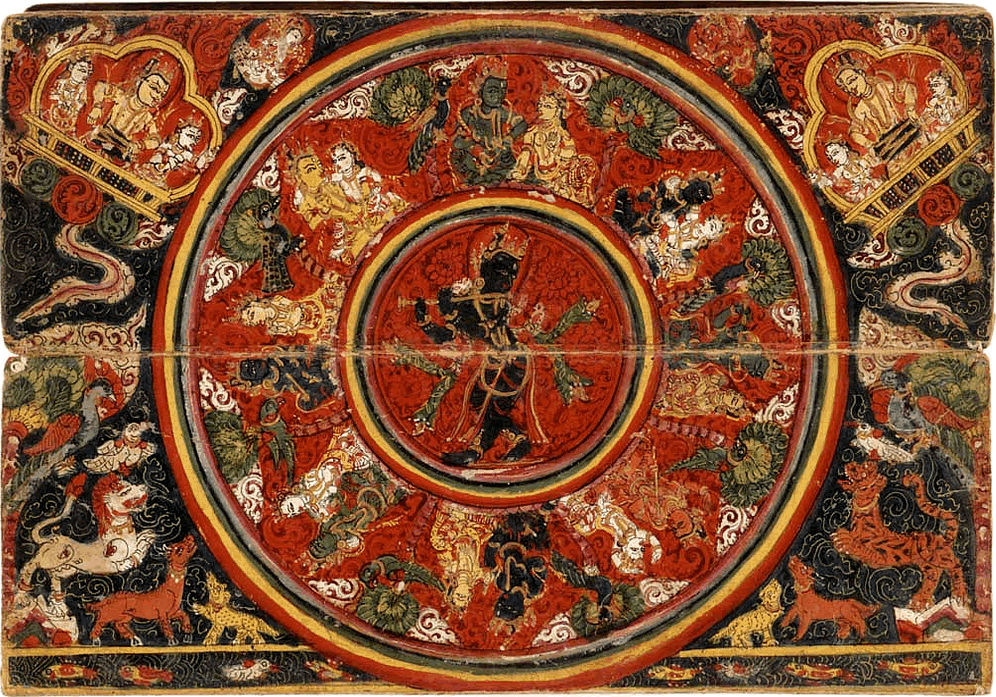
(1) S'uka
said:
'In this [book, the
S'rîmad Bhâgavatam] the
following
[ten]
subjects are
discussed: primary
creation [sarga], how the interactions of life and the lifeless
came about [visarga], the planetary order [sthâna],
the
maintenance of belief [poshana], the impetus for action [ûtaya],
the
administrative
eras
[manvantaras], stories about the Lord's appearances [îs'a-anukathâ],
renouncing
a
material
life
[nirodha],
liberation
in
devotional
service
[mukti] and the shelter
[the refuge of Krishna, âs'raya].
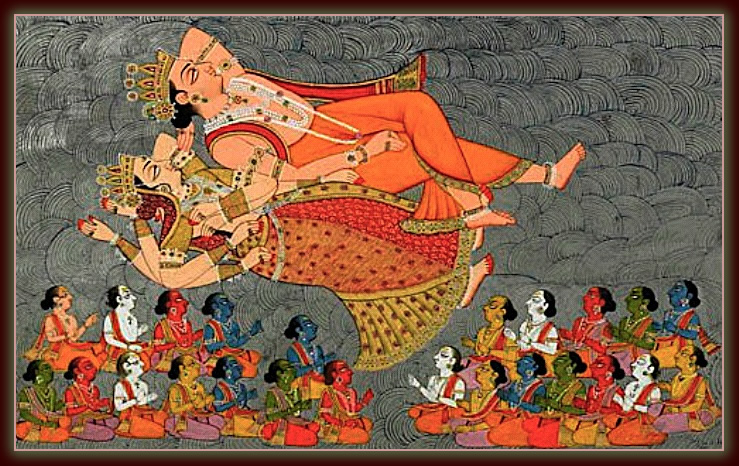
(11) Residing in these
waters of His own creation
for a
thousand
celestial years He became known by the name of
Nârâyana
['to follow the path of
Nâra'] because these waters [nârâ] emanated from the
Supreme Person [from Nara].
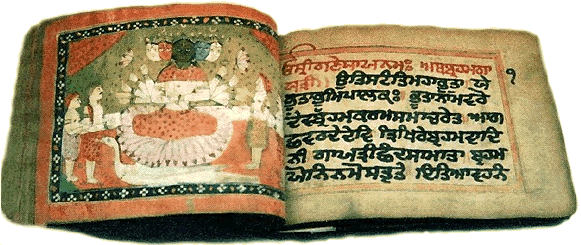
Thus the second Canto of
the S'rîmad Bhâgavatam ends named:
The Cosmic Manifestation.
For copyright notices
concerning the individual images
please look at the bottom of the chapter they belong to.