Chapter 7: Further questions by Vidura
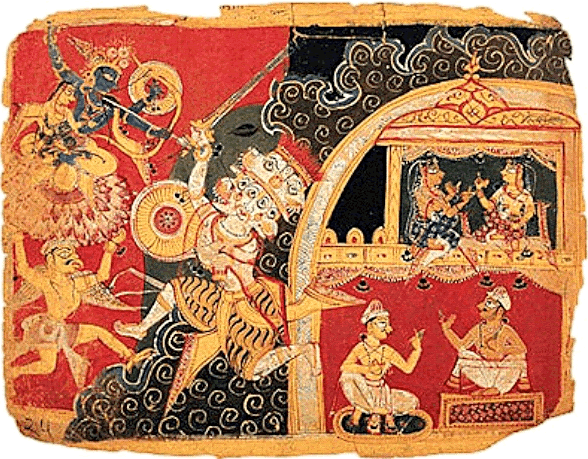
(14) When
one can put an end to all
kinds of misery by simply
hearing about [meditating upon] the qualities and such
of Murâri
[Krishna as the enemy of Mura], what then may one expect from the,
according to one's nature, serving in the dust of His lotus feet?'
Chapter 8: Manifestation of Brahmâ from
Garbhodakasâyî Vishnu
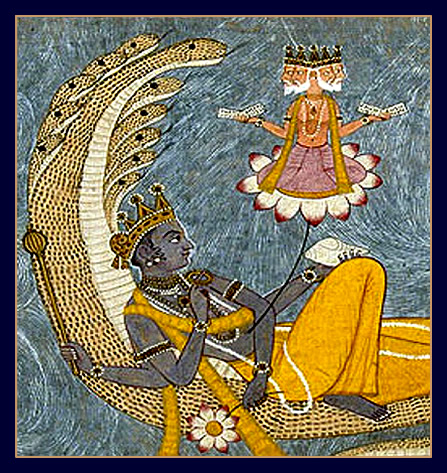
(18) 'Who am I, seated on
top of this lotus? Wherefrom has it originated? There must be something
in the water below.
Being present here implies the existence of that from which it
sprouted!'
Chapter 9: Brahmâ's Prayers for Creative Energy
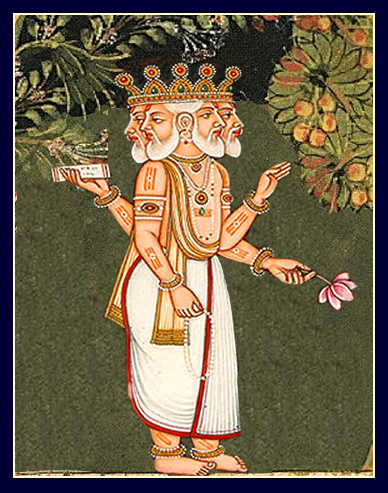
(12) You
are never
that
much pleased by pompous arrangements with a lot of
paraphernalia of high-class servants who are of worship with hearts
full
of
all kinds of desires. For You, the variously perceived Unique and
Only Well-wisher, the Supersoul within the living entities, are there
to
show all living entities Your causeless mercy; You cannot be achieved
by
those who settle for what is man-made and temporal [asat].
Chapter 10: Divisions of the Creation
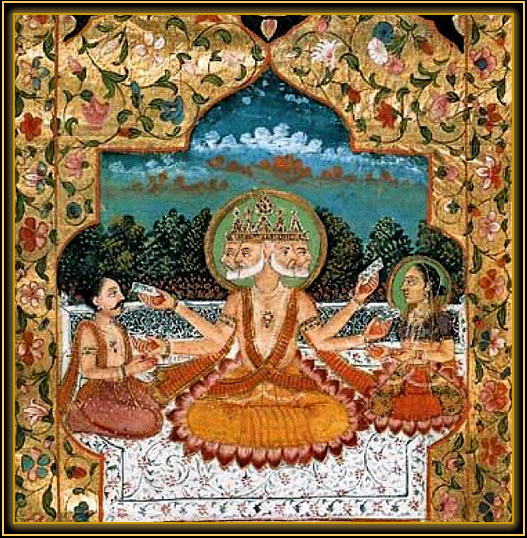
(14) The conditioning [or
creation] is divided in nine
kinds. Next to the formation according to the basic qualities [viz. the
gunas or the modes of goodness, passion and ignorance], there is the formation according to
the material qualities of
time [movement,
knowledge
and
inertia]
and the three forms of creation that find their end
[of plants, animals and human beings].
Chapter 11: Division of Time Expanding from the
Atom
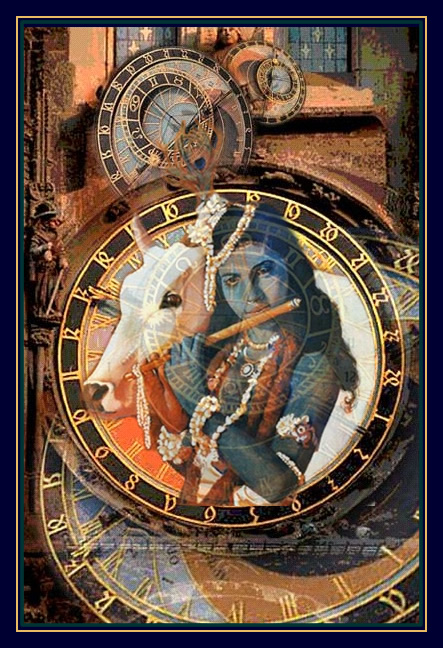
(15)
With
attention
for
all
His
five
different
types
of
years,
one should
be of respect for the One [Lord
of
Time] who,
differing
from
all
that
was
created,
moves under
the
name
of
Eternal
Time and who with His energy in different ways invigorates the seeds of
creation while during
the
day
dissipating
the
darkness
of
the
living
entities.
By
thus performing sacrifices one develops quality in one's
material existence.'
Chapter 12: Creation of the Kumâras and Others
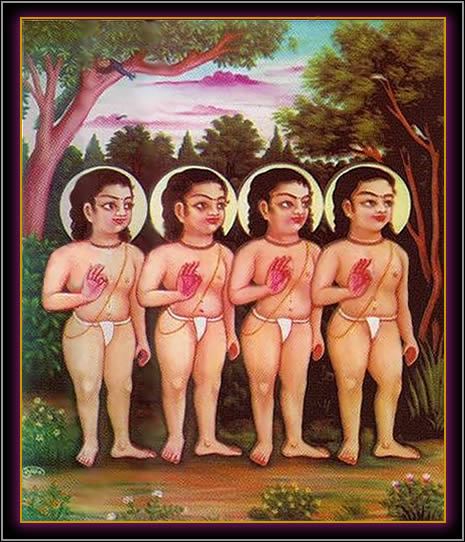
(4) The great self-born soul then
created Sanaka, Sananda, Sanâtana and Sanat-kumâra [the
four Kumâras] who are
lifelong
celibates ['they whose seed goes upwards'] free from all profit-minded action.